For a long time, the pool industry was driven by a fairly simple idea: bigger was better.
Larger pools, deeper ends, expansive decks, and oversized entertainment areas were often viewed as a standard backyard upgrade. The assumption was that more water, more square footage, and more features automatically create a better outdoor experience.
Over the last decade, however, we've seen a noticeable shift.
Homeowners are asking different questions than they once did. Conversations around outdoor spaces are increasingly shaped by how they will be used day to day, as well as their overall scale and layout.They're asking how a backyard can help them unwind after work, how it supports health and wellness, how it feels to sit beside the water on a quiet evening, and how it contributes to the enjoyment of their property throughout the year.
That change in thinking is reshaping pool design in some interesting ways.
How Homeowners Are Using Their Backyards Differently
One of the common realizations many homeowners have during the design process is that they spend far more time around the pool than they do swimming in it.
Pools are still fantastic for cooling off on hot days, exercising, spending time with family, and hosting friends. But when people reflect on how they actually use their backyard, swimming often represents a smaller portion of the overall experience.
Much of the time, the pool becomes part of the atmosphere of the property.
It's what you look at while having coffee in the morning. It's the focal point outside the kitchen window. It's the backdrop to an evening spent on the patio. It's the movement of water, the reflection of light, and the feeling of being outdoors.
As a result, many homeowners are placing greater importance on the overall experience of the space rather than simply maximizing the size of the pool itself.
Pools Have Become Part of the Landscape
One of the notable changes we've observed is that pools are increasingly being viewed as landscape features that play a larger role in shaping the overall character of outdoor spaces.
A well-designed pool helps shape the character of an outdoor environment. It introduces movement, reflection, sound, and visual interest. It influences how people experience the space from inside the home and across the backyard.
This is often why the placement of a pool matters just as much as the pool itself.
The relationship between the water, surrounding planting, outdoor living areas, and views from the home can influence how successful a project feels once it's complete.
When everything works together, the pool becomes part of a larger outdoor experience rather than an isolated feature in the yard.
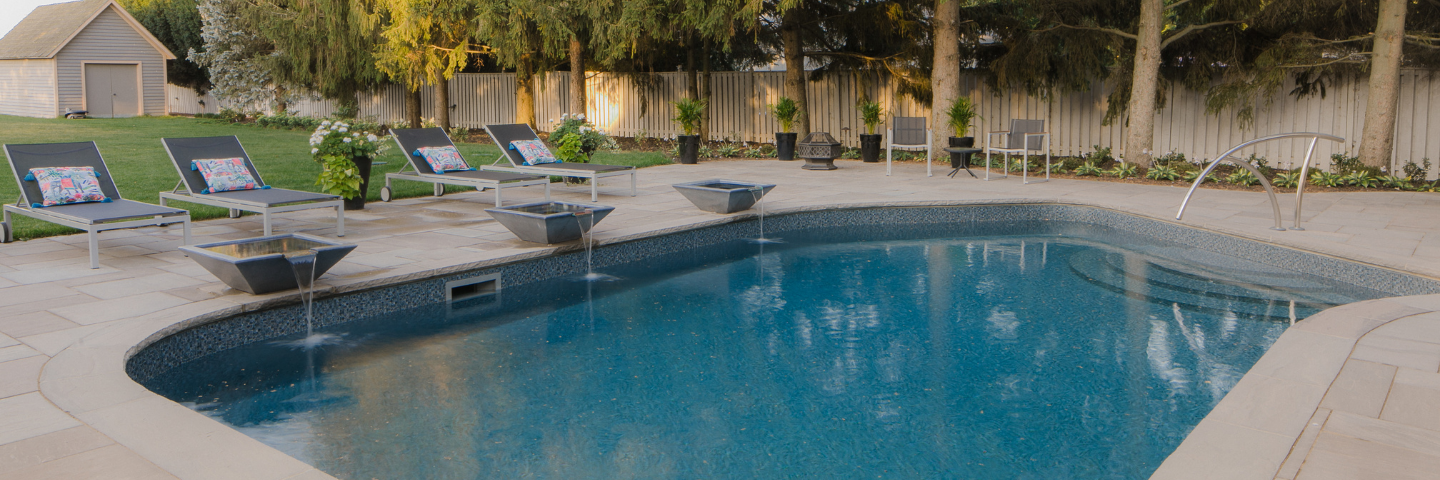
Why Smaller Pools Are Becoming More Popular
Another trend we've seen emerge is a growing preference for smaller, more intentional pool designs.
This isn't necessarily about budget. It's largely a reflection of changing lifestyles.
Many homeowners are less focused on creating a large swimming area and more interested in creating spaces that support relaxation, wellness, and everyday enjoyment.
Features like lounge ledges, integrated seating, tanning shelves, and shallow social zones have become increasingly popular because they align with how people spend time outdoors.
Rather than designing around the occasional large gathering, many homeowners are designing around a typical weekday evening.
The goal is often to create a comfortable place to cool off, relax with family, enjoy the outdoors, and disconnect from the pace of everyday life.
In many cases, a thoughtfully designed smaller pool can achieve that outcome effectively.
The Rise of Effortless Ownership
Homeowners today also place a much higher value on convenience than they did a decade ago.
Automation systems, robotic cleaners, integrated covers, remote controls, and simplified maintenance solutions have become standard expectations for many clients.
Busy families and professionals want the benefits of having a pool without feeling like they're taking on another major responsibility.
The conversation has shifted from "How many features can we add?" to "How easy is this going to be to enjoy?"
When maintenance is simplified and day-to-day operation becomes almost effortless, homeowners tend to use their outdoor spaces more often and enjoy them more fully.
Which Pool Type Is Right?
One of the common questions we receive is which type of pool is best.
The reality is that there isn't a universal answer.
The right pool depends on the property, the architecture, and how the homeowner intends to use the space.
Vinyl Pools
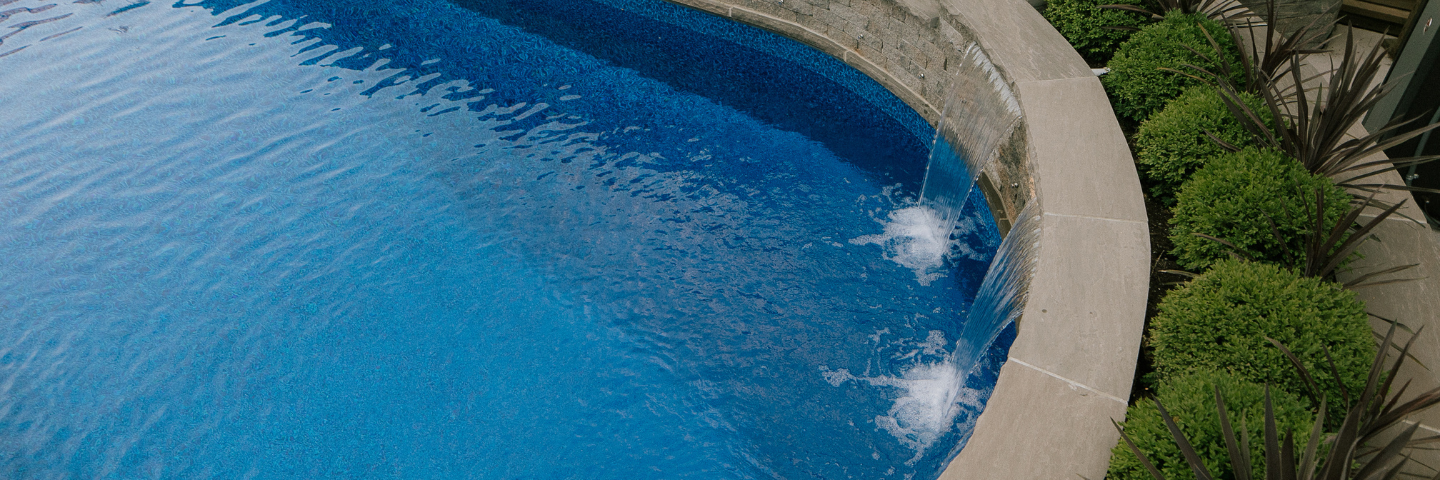
Vinyl liner pools continue to represent the majority of our projects because they offer exceptional flexibility.
They can be customized in terms of shape, size, depth, tanning ledges, integrated steps, and overall layout. They're also relatively straightforward to repair over time, making them a practical choice for many homeowners.
For projects where the pool needs to fit within a larger landscape vision, vinyl often provides the greatest design flexibility.
Fiberglass Pools
Fiberglass pools are often well suited to smaller properties, plunge pools, and wellness-focused spaces.
Their efficient installation process and streamlined designs make them a strong option when simplicity and ease of ownership are priorities.
They can work particularly well in projects where the pool serves as a compact, highly functional element within the broader landscape.
Concrete and Stainless Steel Pools
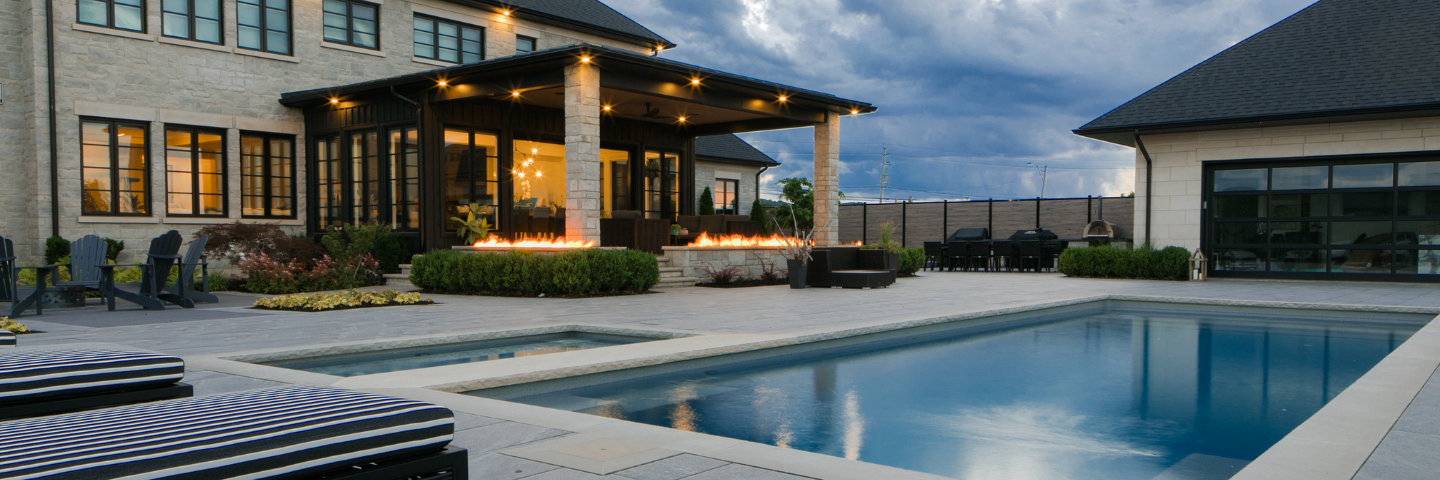
Concrete and stainless steel pools occupy a more specialized category.
These systems are often selected for unique architectural applications where custom detailing, specific design requirements, or highly tailored aesthetics drive the decision-making process.
Like any material, their suitability depends entirely on the goals of the project.
A Mistake Many Homeowners Make
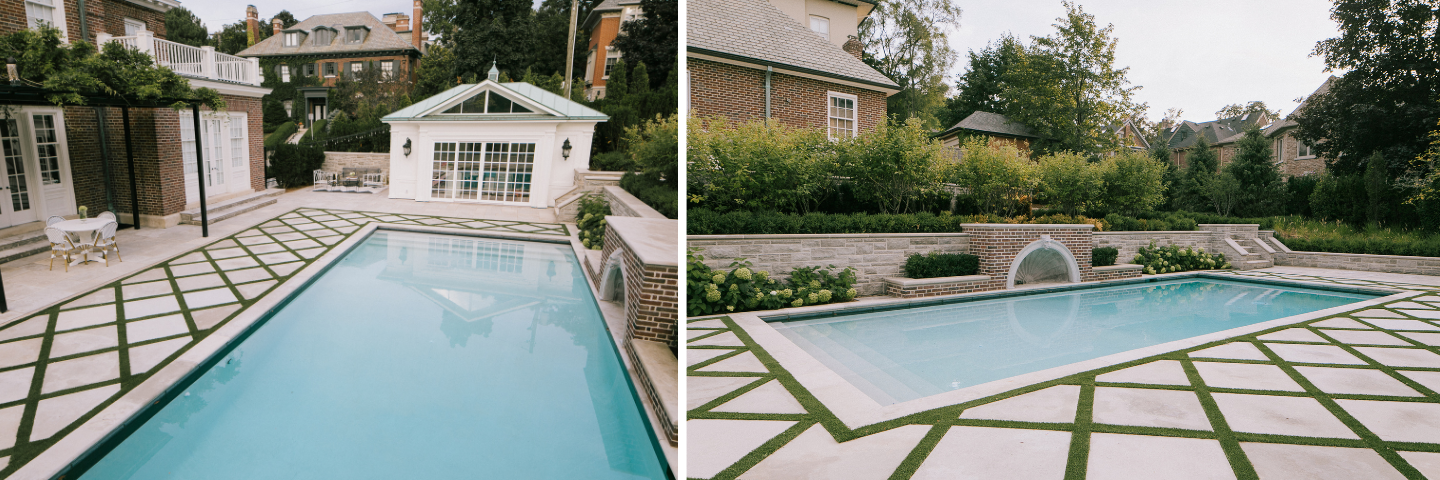
One of the common mistakes we see is treating the pool as a separate project rather than part of a larger outdoor environment.
A pool doesn't exist in isolation.
Its placement affects circulation throughout the property. Its location influences sun exposure. Its relationship to patios, outdoor kitchens, cabanas, and planting areas impacts how the entire backyard functions.
The view from inside the home matters too.
A pool may be visible from a kitchen, great room, office, or primary bedroom for much of the year. Those sightlines deserve just as much consideration as the experience of being outside.
Some of our favourite projects bring planting closer to the water's edge rather than surrounding everything with expansive hardscape. The result often feels more natural, more inviting, and more connected to the surrounding landscape.
Technical Considerations That Can Influence Daily Enjoyment
While homeowners naturally focus on aesthetics, there are many technical considerations that can play a major role in the success of a pool project.
Grading is one of them.
Because pools establish a fixed elevation within a property, they influence drainage patterns across the site. Hardscape surfaces need to direct water appropriately while maintaining comfortable transitions between the home, pool, and surrounding outdoor spaces.
Circulation is another important consideration.
Pathways, patios, outdoor structures, and gathering areas all need to connect naturally without creating awkward pinch points or disconnected zones.
These details aren't always visible when a project is complete, but they're often what separate a backyard that simply looks good from one that functions beautifully over time.
Better Living Starts With Better Design
These projects tend to shape how people experience and use their homes over time.
They create an atmosphere, encourage time outdoors, and offer a space to slow down at the end of the day.
For many homeowners, memories form in different ways – time spent in the water, evenings beside it, and quiet moments where the backyard becomes part of everyday living.